'%3e%3cg%20id='Dropdown'%20transform='translate(0.000000,%2087.000000)'%3e%3cg%20id='E+G'%20transform='translate(41.000000,%20107.000000)'%3e%3cg%20id='Energy'%3e%3cpath%20d='M28.6614583,0.00278271887%20C28.3068696,0.0310537163%2028.0166395,0.296212602%2027.9565972,0.646755141%20C27.0120028,6.12434175%2024.9493871,8.29599172%2022.9618056,10.3792455%20C20.974224,12.4624993%2019,14.568918%2019,19.1397019%20C19,21.4064602%2020.0199789,23.326336%2021.5034722,24.7896495%20C22.9869655,26.2529629%2024.9305213,27.2987099%2026.9236111,27.9609103%20C27.2539406,28.0696749%2027.6163432,27.9459923%2027.8112084,27.6579865%20C28.0060736,27.3699807%2027.9860444,26.9876442%2027.7621528,26.7215671%20C25.8911722,24.4768249%2025.4242589,22.9337683%2025.4652778,21.7034415%20C25.4962761,20.77368%2025.8664859,19.9417631%2026.2916667,19.0789498%20C26.827204,19.4937645%2027.4437434,19.9845672%2027.7378472,20.172488%20C27.9651267,20.3177112%2028.1276096,20.4162787%2028.2482639,20.4762488%20C28.3689182,20.5362184%2028.4913194,20.5734521%2028.4913194,20.5734521%20C28.717301,20.6445007%2028.9633491,20.6087189%2029.1597222,20.4762488%20C29.1597222,20.4762488%2030.0184826,19.8776829%2030.6788194,18.629384%20C31.1343164,17.7683137%2031.4954188,16.5458071%2031.5538194,14.996407%20C33.484596,17.3302866%2034.1909236,19.3112695%2034.1666667,20.9865666%20C34.1315111,23.414589%2032.6686974,25.4008452%2031.3107639,26.6486646%20C31.0663583,26.8798297%2030.9982995,27.2418928%2031.1420872,27.5460003%20C31.285875,27.8501078%2031.6089151,28.0273236%2031.9427083,27.9852111%20C36.1505997,27.3956076%2040,23.7305928%2040,19.0667994%20C40,15.8722076%2039.4406767,13.0066827%2037.8003472,10.0268835%20C36.1600178,7.04708384%2033.4767389,3.96383613%2029.2447917,0.197189759%20C29.0853044,0.0550382428%2028.8743556,-0.0152645278%2028.6614583,0.00278271887%20Z%20M29.1475694,2.25061118%20C32.7187532,5.53419453%2035.054444,8.25246505%2036.4392361,10.7680592%20C37.9505272,13.5134492%2038.4444444,16.047927%2038.4444444,19.0667994%20C38.4444444,21.9370049%2036.5622036,24.4093847%2034.1545139,25.6523297%20C35.0113812,24.3788585%2035.6957163,22.8414627%2035.7222222,21.0108674%20C35.7593475,18.4468377%2034.5161599,15.5273437%2031.2135417,12.2747119%20C30.9734929,12.0391962%2030.6092399,11.9846003%2030.3106684,12.1393852%20C30.0120969,12.29417%2029.8468381,12.6232744%2029.9010417,12.9551356%20C30.2743758,15.382775%2029.8153963,16.9365578%2029.3055556,17.9003587%20C29.0562047,18.371731%2028.8019647,18.6822887%2028.6128472,18.8845431%20C28.5948456,18.8732771%2028.5958606,18.8726859%2028.5763889,18.8602415%20C28.1980774,18.618515%2027.5367773,18.157598%2026.4982639,17.2928367%20C26.3166906,17.1413285%2026.0760377,17.0806398%2025.8443135,17.1279213%20C25.6125894,17.1752027%2025.414966,17.3253182%2025.3072917,17.535845%20C24.7394174,18.6713734%2023.9659256,19.9690638%2023.9097222,21.6548391%20C23.8726844,22.7658111%2024.2115194,24.0074137%2024.9913194,25.4093203%20C24.0984523,24.9173556%2023.2737746,24.3513105%2022.5972222,23.6839608%20C21.3376982,22.4415699%2020.5555556,20.9510464%2020.5555556,19.1397019%20C20.5555556,14.984724%2022.0813316,13.543212%2024.0798611,11.4484829%20C25.9024554,9.53815784%2028.0226772,7.05054145%2029.1475694,2.25061118%20Z'%20id='Gas'%20fill='%23ED6847'%20fill-rule='nonzero'%3e%3c/path%3e%3cpolygon%20id='Path'%20stroke='%23ED6847'%20stroke-width='1.5'%20stroke-linejoin='round'%20points='9.44444444%200%200%2016.8%208.5%2016.8%207.55555556%2028%2017%2011.2%208.5%2011.2'%3e%3c/polygon%3e%3c/g%3e%3c/g%3e%3c/g%3e%3c/g%3e%3c/g%3e%3c/svg%3e)
%20-%20https://sketch.com%20--%3e%3ctitle%3e6F3FEDBC-7D75-4D16-8CBD-0EE2D3FDD960%3c/title%3e%3cdesc%3eCreated%20with%20sketchtool.%3c/desc%3e%3cg%20id='Version-Control'%20stroke='none'%20stroke-width='1'%20fill='none'%20fill-rule='evenodd'%20stroke-linejoin='round'%3e%3cg%20id='D-1.00'%20transform='translate(-811.000000,%20-998.000000)'%20stroke='%23FF6841'%20stroke-width='2'%3e%3cg%20id='sticky-footer'%20transform='translate(-28.000000,%20876.000000)'%3e%3cg%20id='Group-52'%20transform='translate(403.000000,%2099.000000)'%3e%3cg%20id='Group-48'%20transform='translate(400.000000,%200.974684)'%3e%3cg%20id='Group-53'%20transform='translate(37.000000,%2023.025316)'%3e%3cg%20id='Group-54'%3e%3cg%20id='zap-(2)'%20transform='translate(0.000000,%200.000000)'%3e%3cpolygon%20id='Path'%20points='10.5530061%200.475308642%200%2017.5864198%209.49770552%2017.5864198%208.44240491%2028.9938272%2018.995411%2011.882716%209.49770552%2011.882716'%3e%3c/polygon%3e%3c/g%3e%3c/g%3e%3c/g%3e%3c/g%3e%3c/g%3e%3c/g%3e%3c/g%3e%3c/g%3e%3c/svg%3e)
'%20fill='%23ee6747'%20fill-rule='nonzero'%3e%3cg%20id='Dropdown'%20transform='translate(0.000000,%2087.000000)'%3e%3cg%20id='G'%20transform='translate(51.000000,%20264.000000)'%3e%3cpath%20d='M9.66145833,0.00278271887%20C9.30686959,0.0310537163%209.01663948,0.296212602%208.95659722,0.646755141%20C8.01200283,6.12434175%205.94938711,8.29599172%203.96180556,10.3792455%20C1.974224,12.4624993%200,14.568918%200,19.1397019%20C0,21.4064602%201.01997894,23.326336%202.50347222,24.7896495%20C3.9869655,26.2529629%205.93052133,27.2987099%207.92361111,27.9609103%20C8.25394062,28.0696749%208.61634323,27.9459923%208.81120844,27.6579865%20C9.00607364,27.3699807%208.98604441,26.9876442%208.76215278,26.7215671%20C6.89117217,24.4768249%206.42425894,22.9337683%206.46527778,21.7034415%20C6.49627611,20.77368%206.86648589,19.9417631%207.29166667,19.0789498%20C7.827204,19.4937645%208.44374339,19.9845672%208.73784722,20.172488%20C8.96512672,20.3177112%209.12760956,20.4162787%209.24826389,20.4762488%20C9.36891822,20.5362184%209.49131944,20.5734521%209.49131944,20.5734521%20C9.717301,20.6445007%209.9633491,20.6087189%2010.1597222,20.4762488%20C10.1597222,20.4762488%2011.0184826,19.8776829%2011.6788194,18.629384%20C12.1343164,17.7683137%2012.4954188,16.5458071%2012.5538194,14.996407%20C14.484596,17.3302866%2015.1909236,19.3112695%2015.1666667,20.9865666%20C15.1315111,23.414589%2013.6686974,25.4008452%2012.3107639,26.6486646%20C12.0663583,26.8798297%2011.9982995,27.2418928%2012.1420872,27.5460003%20C12.285875,27.8501078%2012.6089151,28.0273236%2012.9427083,27.9852111%20C17.1505997,27.3956076%2021,23.7305928%2021,19.0667994%20C21,15.8722076%2020.4406767,13.0066827%2018.8003472,10.0268835%20C17.1600178,7.04708384%2014.4767389,3.96383613%2010.2447917,0.197189759%20C10.0853044,0.0550382428%209.87435555,-0.0152645278%209.66145833,0.00278271887%20Z%20M10.1475694,2.25061118%20C13.7187532,5.53419453%2016.054444,8.25246505%2017.4392361,10.7680592%20C18.9505272,13.5134492%2019.4444444,16.047927%2019.4444444,19.0667994%20C19.4444444,21.9370049%2017.5622036,24.4093847%2015.1545139,25.6523297%20C16.0113812,24.3788585%2016.6957163,22.8414627%2016.7222222,21.0108674%20C16.7593475,18.4468377%2015.5161599,15.5273437%2012.2135417,12.2747119%20C11.9734929,12.0391962%2011.6092399,11.9846003%2011.3106684,12.1393852%20C11.0120969,12.29417%2010.8468381,12.6232744%2010.9010417,12.9551356%20C11.2743758,15.382775%2010.8153963,16.9365578%2010.3055556,17.9003587%20C10.0562047,18.371731%209.80196467,18.6822887%209.61284722,18.8845431%20C9.59484556,18.8732771%209.59586056,18.8726859%209.57638889,18.8602415%20C9.19807739,18.618515%208.53677728,18.157598%207.49826389,17.2928367%20C7.31669062,17.1413285%207.07603766,17.0806398%206.84431353,17.1279213%20C6.61258939,17.1752027%206.41496598,17.3253182%206.30729167,17.535845%20C5.73941744,18.6713734%204.96592561,19.9690638%204.90972222,21.6548391%20C4.87268444,22.7658111%205.21151944,24.0074137%205.99131944,25.4093203%20C5.09845233,24.9173556%204.27377456,24.3513105%203.59722222,23.6839608%20C2.33769822,22.4415699%201.55555556,20.9510464%201.55555556,19.1397019%20C1.55555556,14.984724%203.08133156,13.543212%205.07986111,11.4484829%20C6.90245539,9.53815784%209.02267722,7.05054145%2010.1475694,2.25061118%20Z'%20id='Gas'%3e%3c/path%3e%3c/g%3e%3c/g%3e%3c/g%3e%3c/g%3e%3c/svg%3e)



'%20fill='%23ED6847'%3e%3cg%20id='Dropdown'%20transform='translate(0.000000,%2087.000000)'%3e%3cg%20id='Product-2'%20transform='translate(46.000000,%20190.000000)'%3e%3cg%20id='Broadband'%3e%3cpath%20d='M20.5732869,-2.60195731%20C27.9034456,5.24340393%2027.9034456,17.0480543%2020.5732869,24.8934155%20C20.0932795,25.4071603%2019.2965042,25.4260909%2018.7936394,24.9356981%20C18.2907745,24.4453054%2018.2722449,23.631291%2018.7522522,23.1175462%20C25.1538143,16.2660483%2025.1538143,6.02540992%2018.7522522,-0.826087976%20C18.2722449,-1.33983279%2018.2907745,-2.15384714%2018.7936394,-2.64423992%20C19.2965042,-3.13463269%2020.0932795,-3.11570213%2020.5732869,-2.60195731%20Z%20M16.9076288,1.66179641%20C20.8986291,7.17182407%2020.8986291,15.1341784%2016.9076288,20.6442061%20C16.4941085,21.2151178%2015.70587,21.3354558%2015.1470489,20.9129885%20C14.5882278,20.4905212%2014.4704384,19.6852284%2014.8839588,19.1143166%20C18.2165429,14.5133069%2018.2165429,7.79269561%2014.8839588,3.19168587%20C14.4704384,2.62077416%2014.5882278,1.81548135%2015.1470489,1.39301404%20C15.70587,0.970546731%2016.4941085,1.0908847%2016.9076288,1.66179641%20Z%20M12.1662314,5.02847662%20C14.7158963,8.09845419%2014.5399037,14.2790917%2012.1823786,17.2359954%20C11.7433373,17.7866589%2010.9504768,17.869446%2010.4114751,17.4209055%20C9.87247348,16.9723651%209.79143964,16.1623502%2010.230481,15.6116868%20C11.8466786,13.5845861%2011.9833844,8.78364823%2010.2466283,6.6924705%20C9.79686021,6.15091784%209.86196897,5.33940496%2010.3920527,4.87990574%20C10.9221365,4.42040652%2011.7164633,4.48692397%2012.1662314,5.02847662%20Z%20M5.60746897,9.57230171%20C6.49524957,9.57230171%207.21493794,10.2767487%207.21493794,11.145728%20C7.21493794,12.0147074%206.49524957,12.7191544%205.60746897,12.7191544%20C4.71968837,12.7191544%204,12.0147074%204,11.145728%20C4,10.2767487%204.71968837,9.57230171%205.60746897,9.57230171%20Z'%20id='Combined-Shape'%20transform='translate(15.035453,%2011.145729)%20rotate(-90.000000)%20translate(-15.035453,%20-11.145729)%20'%3e%3c/path%3e%3c/g%3e%3c/g%3e%3c/g%3e%3c/g%3e%3c/g%3e%3c/svg%3e)
'%20stroke='%23ee6747'%20stroke-width='2'%3e%3cg%20id='Dropdown'%20transform='translate(0.000000,%2087.000000)'%3e%3cg%20id='Product-3'%20transform='translate(49.000000,%20262.000000)'%3e%3cpath%20d='M16.4597149,26.1333094%20L14.3419673,28.3749166%20C13.9460479,28.7974079%2013.4001977,29.0236424%2012.8385169,28.9980406%20C12.2768362,28.9724388%2011.7513803,28.6973733%2011.3912391,28.2404202%20C9.45504819,25.6913203%208.11074548,22.697033%207.46634693,19.4981522%20C6.84455102,16.5455759%206.84455102,13.4842997%207.46634693,10.5317234%20C8.11492411,7.31963638%209.46920558,4.31442984%2011.4194757,1.75956735%20C11.7785051,1.30403208%2012.3018843,1.02919527%2012.8617639,1.00219317%20C13.4216436,0.97519107%2013.9664664,1.19851021%2014.3631448,1.6175989%20L16.4808924,3.85920608%20C17.1965105,4.60191322%2017.2810715,5.7910742%2016.6785488,6.63879898%20C16.0902079,7.45077595%2015.5905366,8.33059696%2015.1890663,9.26147938%20C14.8670699,10.0128736%2014.1614003,10.4972186%2013.3819218,10.5018354%20L11.5888955,10.5018354%20C10.8265132,13.4361748%2010.8265132,16.5339246%2011.5888955,19.4682641%20L13.3819218,19.4682641%20C14.1614003,19.4728808%2014.8670699,19.9572258%2015.1890663,20.70862%20C15.5905366,21.6395025%2016.0902079,22.5193235%2016.6785488,23.3313004%20C17.28825,24.1886576%2017.1941479,25.393566%2016.4597149,26.1333094%20Z'%20id='Phone'%20transform='translate(12.040000,%2015.000000)%20rotate(-30.000000)%20translate(-12.040000,%20-15.000000)%20'%3e%3c/path%3e%3c/g%3e%3c/g%3e%3c/g%3e%3c/g%3e%3c/svg%3e)








Sign-up to The Backbone, our free fortnightly newsletter for anyone who owns, runs, or works in one of the millions of businesses across the UK. Get the inside track from real business owners just like you

Connectivity
What can we help you with?

Business electricity comparison
Compare business electricity rates

Fix your rates to avoid more expensive out-of-contract rates
Switch business electricity with Bionic to save up to £1,450
There's no price cap protection on business electricty
Compare Electricity Rates
By clicking 'Compare Electricity Rates' you agree for us to search your current energy supplier and usage through industry held data. Enter manually

We compare from a panel of business energy suppliers


Compare Business Electricity Quotes
We just need your business postcode to get started
No long forms. Start a comparison with just your postcode. We use smart data to find energy info.
Compare quotes from a panel of energy suppliers. Including big names and specialist providers.
An energy expert will talk you through the quotes on screen and support you with the switch.
How Bionic business electricity comparison works
Compare business electricity quotes in three simple steps
1
Start your quote online
Start a business electricity comparison with just your postcode
2
We do the comparison
We compare quotes from our panel of business electricity suppliers
3
You choose your new supplier
You choose the supplier and rates you like best
What are the latest business electricity rates?
When reviewing current prices, many business owners ask, "What is a good business electricity rate?" The answer depends largely on your energy usage, contract type and market conditions, but understanding average rates is a great place to start.
When it comes to business electricity, the size of your business can be determined by how much electricity it uses. Smaller businesses tend to have simpler tariffs, while larger organisations often require more tailored solutions.
To give you an idea of how much your business should pay for electricity, here are the latest business electricity rates per kWh and standing charges for May 2026. We've also included average annual bill size to help you compare.
| Business size | Average annual usage (kWh) | Electricity unit rate (per kWh) | Electricity standing charge (daily) | Estimated annual bill | Ready to switch? |
| Micro Business | 5,000 to 15,000 | 25.1p | 55.8p | £2,714 (based on annual usage of 10,000 kWh) | Compare rates now |
| Small Business | 15,000 to 25,000 | 24.7p | 64.9p | £5,177 (based on annual usage of 20,000 kWh) | Compare rates now |
| Medium Business | 25,000 to 55,000 | 25.4p | 80.6p | £10,454 (based on annual usage of 40,000 kWh) | Compare rates now |
| Large Business | More than 55,000 kWh | 25.7p | 91.9p | £14,470 (based on annual usage of 55,000 kWh) | Compare rates now |
Note: Prices are correct as of May 2026. Rates and bill size may vary according to your meter type and business location. The prices you’re quoted may be different from the averages shown. The figures shown are the average unit rates and standing charges received by Bionic from our panel of suppliers from May 1 to May 12, 2026.
Click to compare today's rates or speak to one of our tech-enabled energy experts on 0800 860 6833
Are business electricity prices going down?
While business electricity prices have fallen from peak crisis levels, they remain significantly higher than before 2022. Costs are still influenced by factors such as volatile wholesale markets, global events and policy-related charges.
Although government support schemes and future reforms may help ease costs for some sectors, businesses shouldn’t rely on prices falling further. Instead, it’s sensible to focus on securing competitive fixed-rate deals where possible to protect against ongoing uncertainty.
You can learn more in our guide, Why are energy prices so high?
Why compare...
business electricity rates?
Business electricity rates are constantly changing, and without a fixed deal, you could be overpaying on price. Loyalty to your supplier doesn't always pay when it comes to business electricity. Suppliers will often keep the best rates for new customers only, to entice them in. Here’s why you should consider running a business electricity comparison and switching:
- Avoid out-of-contract rates - Have you noticed a sudden rise in your payments? You might be paying out-of-contract rates. Switching now could shave money off your electricity bill, and if you really don’t want to switch, we’ll get to work and negotiate a better price with your current supplier.
- Lock in for longer - Energy markets are unpredictable. For peace of mind, it’s best to lock in the lowest rate now, for longer. We can organise competitive deals for 1-4 years, depending on what your business needs.
- Trusted suppliers – No one wants their supplier to go bust. We work with a panel of trusted suppliers who offer reliable service with great business electricity rates. We’ll manage the admin with them so you can get back to running your business.
Click to compare today's rates or speak to one of our tech-enabled energy experts on 0800 860 6833
What business electricity tariffs are available?
When you compare business electricity, you'll notice several different tariff types. Bionic’s tech-enabled experts will discuss your options to ensure you get the right deal. Below are the main types of electricity tariffs on offer to SMEs.

Fixed rate contracts
Unit rates and standing charges are fixed for the length of your contract.

Variable rate
With a variable-rate contract, your unit rate and standing charge can change, depending on market conditions.

Time of use tariff
A time of use tariff charges less for energy usage during certain hours.

Blend and extend
Your supplier offers to extend your contract at rates between what you’re paying now and the current market rates.

Flex approach
You bulk-buy energy in advance, giving you access to wholesale rates. Usually best for high usage businesses.

Pass through
Your business energy bill is split between fixed wholesale rates, and other charges like National Grid and TNUoS.

Deemed rates
Your supplier's default rates if you don’t arrange a fixed contract before moving into new premises. Avoid.

Out-of-contract rates
Suppliers put you on out-of-contract rates if you don't sort a new contract to start when your current one ends. Avoid.
Business electricity rates for SMEs
If you run a small or medium-sized business, every penny counts. And your electricity bill shouldn’t be significantly eating into your margins. Micro business electricity rates are typically more flexible than those with larger contracts, but they can still vary significantly depending on your usage, location, and contract terms. That’s why comparing options is essential.
At Bionic, we make it easy to compare business electricity rates from trusted UK suppliers, helping you find a deal that actually works for your business. Whether you run a café, office, retail shop or small warehouse, we’ll match you with tariffs designed for your needs and usage.
Business electricity rates for large businesses
For large businesses, energy isn’t just another overhead, it’s a major operational cost. With higher consumption comes greater exposure to market fluctuations, making it critical to secure the right electricity contract at the right time.
By comparing suppliers with Bionic, you can access competitive fixed-term contracts, flexible purchasing options, and even multi-site agreements designed to optimise costs across your entire operation. Whether you manage manufacturing facilities, large offices, or multiple locations, the right energy strategy can deliver substantial savings.
For more information, check out our large business and industrial business energy page..
Compare electricity rates for industrial and large businesses
Find out why business energy is different, with our business energy coach
Click to compare today's rates or speak to one of our tech-enabled energy experts on 0800 860 6833
How to find who supplies your business electricity
You may need to contact your energy supplier if you have an issue with your bill, a complaint, or are moving premises. If you can't remember who supplies your business electricity, the simplest way to find out is by checking your latest bill.
If you've switched with Bionic, we can let you know who your current supplier is and compare quotes for your next contract if the time is right. At Bionic, we work with a panel of business electricity suppliers, including:
| Supplier name | Electricity unit rate (kWh) | Electricity standing charge (daily) | Ready to switch? |
| British Gas | 27.3p | 51.6p | Compare rates now |
| BG Lite | 26.9p | 55.0p | Compare rates now |
| EDF Energy | 24.3p | 59.6p | Compare rates now |
| EON Next | 28.3p | 36.4p | Compare rates now |
| Smartest Energy | 23.1p | 68.8p | Compare rates now |
| Valda Energy | 23.1p | 74.3p | Compare rates now |
| Yorkshire Gas and Power | 24.5p | 110.0p | Compare rates now |
| Yu Energy | 23.1p | 101.0p | Compare rates now |
Note: Prices are correct as of May 2026. Rates and bill size may vary according to your meter type and business location. The prices you’re quoted may be different from the averages shown. The figures shown are unit rates and standing charges received by Bionic from our panel of suppliers from May 1 to May 12, 2026, based on an average gas consumption of 22,223 kWh per year and an average electricity consumption of 9,234 kWh per year.
We can also compare rates from other suppliers not listed above, including Crown Gas & Power, SSE, TotalEnergies, Corona, Engie, and more.
If your business uses more than 55,000 kWh of electricity each year, suppliers will classify you as a large business and handle your supply differently. To find out more, check out our guide to large business energy.
If you can't find a recent electricity bill, you can find out who your supplier is by contacting your local network operator (the company responsible for the wires that carry electricity to your premises).
You can do this by entering your postcode into the Energy Network Association search tool or by calling the number below for your regional network operator:
| Region | Number |
| North Scotland | 0345 0262554 |
| South & Central Scotland | 0300 1010300 |
| North East England & Yorkshire | 0800 01113332 |
| North West England | 0800 1954141 |
| North Wales, North Shropshire, Cheshire & Merseyside | 0330 1010300 |
| South Wales & South West England | 0800 0963080 |
| East & West Midlands | 0800 0963080 |
| Central Southern England | 0345 0262554 |
| Eastern England, South East England and London | 0800 0294285 |
If you've switched with Bionic, you can call us to find out. We can help you compare, switch and renew when the time is right. We only conduct business electricity comparisons with a panel of trusted energy suppliers that offer quality customer service and competitive rates.
What are average electricity rates by business?
If you’ve never switched business electricity, you're unlikely to be on your supplier’s most competitive rates and will be overpaying. This is when it can help to compare what you’re currently paying with the average rates paid by other businesses in your sector.
For instance, if you run a restaurant, asking how much energy an average restaurant uses every year and comparing your current rates will instantly highlight how much you could save by switching suppliers.
Below are examples of how much different business types might pay for electricity if they lock in rates this month.
| Business type | Annual usage | Unit rate (per kWh) | Standing charge (daily) | Cost per year |
| Coffee Shop | 19,000 kWh | 24.7p | 64.9p | £4,930 |
| Hair Salon | 40,000 kWh | 25.4p | 80.6p | £10,454 |
| Small Farm | 30,000 kWh | 25.4p | 80.6p | £7,914 |
| Dental Surgery | 38,000 kWh | 25.4p | 80.6p | £9,946 |
| Restaurant | 25,000 kWh | 24.7p | 64.9p | £6,412 |
| Newsagent | 11,000 kWh | 25.1p | 55.8p | £2,965 |
Note: Prices are correct as of May 2026. Rates and bill size may vary according to your meter type and business location. The prices you’re quoted may be different from the averages shown. The figures shown are the average unit rates and standing charges received by Bionic from our panel of suppliers from May 1 to May 12, 2026.
What costs make up a business electricity bill?
When working out the cost of your business electricity bills, there are two main things to look out for:
- Unit rate – Measured in kilowatt hours (kWh), this is the amount you pay for each unit of gas your business uses. If you're on a fixed tariff, this is the bit that stays the same for the length of your contract.
- Standing charge – This is a daily amount that is charged regardless of whether or not you use any gas. It covers the cost of managing your service and delivering gas to your premises.
But it's not just wholesale prices that affect the rates you'll be quoted. Business electricity suppliers base their rates on the size of your business size and its electricity consumption. And you should always find out whether the business electricity rates you're quoted include VAT. Although a reduced 5% VAT rate is available to certain businesses, most will pay 20% VAT on energy bills, which can really bump up your bills. If you're VAT registered, you should be able to claim this back though. You can find out more in our guide to VAT on business energy.
Your business credit score can also affect the type of deal and rates you're offered.
You may also need to pay other fees, such as the Climate Change Levy, Renewable Obligation, and the Feed-In Tariff.
If you're wondering how wholesale pricing is calculated and why a drop in wholesale prices isn't immediately reflected in the rates you pay or are quoted, then our guide to how power is bought and sold explains it all.
What do I need to compare business electricity?
We can start your business electricity comparison with just your postcode. And we use smart data to help cut the amount of form-filling. But it could help if you have the following info to hand.

The name of your current supplier and your account number
The address of your business
Your monthly or annual business energy usage
Recent meter readings
Why Switch Business Electricity with Bionic?
Switching your business electricity with Bionic gives you access to a wide panel of trusted UK energy suppliers, making it easy to compare tariffs tailored to your needs. With over 20 years of industry experience, our tech-enabled team support you through the process, from sourcing quotes to handling the switch, helping you save time and avoid costly out-of-contract rates.
On average, SMEs can save up to £1,450 by switching business electricity with Bionic. We’ve already supported thousands of UK businesses in comparing electricity quotes and can help you explore the options available to your business. If you also need support with other essentials like insurance, broadband and more, we can help with those too
Business Electricity FAQs
To help you understand more about comparing business electricity and switching suppliers, here are the answers to some of our most frequently asked questions.
How long does it take to switch business electricity?
Although you can compare business electricity deals and sign up for a new deal as soon as your switching window opens - usually up to six months before your deal ends - the actual switch won’t take place until your contract expires.
Non-domestic switches usually take around six weeks to complete. To make sure you’re not rolled onto your supplier’s more expensive rates, you should business electricity comparison and arrange a new deal about two months before your current contract ends.
Will switching interrupt my electricity supply?
No. Both your current and the new supplier will work together to organise a date that your supply is transferred, meaning the provision of power to your premises remains unaffected. And your electricity will still be supplied through the existing cables, meaning there’s no need for digging or drilling at your workplace.
Will my business electricity meter need to be replaced if I switch supplier?
If you have a standard electricity meter, it’s unlikely you'll need a new meter installing when you switch. But if you have a smart meter, you may need a new meter if the one you have isn’t compatible with your new supplier. For more information, check out our guide to smart meters for business.
What is half hourly electricity?
If your business has a peak electricity demand of 100KVA, you’ll need to have a half-hourly meter installed. Half hourly electricity meters automatically submit readings to your supplier every 30 minutes, to help ensure your bills are accurate.
If you have a half hourly meter installed, the MPAN will have ‘00’ after the ‘S’. For more information, check out our guide to half hourly electricity.
Can my business benefit from the Smart Export Guarantee?
The Smart Export Guarantee (SEG) is a scheme you can sign up for to sell any excess renewable power you generate back to the National Grid. It was introduced by the UK Government on January 1, 2020.
SEG replaced the Feed-in Tariff (FIT) that closed on April 1, 2019, for new applicants.
Find out more about selling renewables back to the grid.
Can my business benefit from the solar panels Feed-in Tariff (FiT) scheme?
If you applied to the FiT scheme before April 1, 2019, then your business should have been enrolled on the scheme. This means you can make money by selling back to the National Grid any surplus power generated by solar panels at your premises.
The amount of money you can make depends upon the number of solar panels you have, and your supplier must be a registered FiT licensee.
Is my business eligible for a VAT discount?
Business electricity bills usually include VAT at 20%, unless your business qualifies for a reduced 5% rate under HMRC rules. In practice, that means most businesses will see VAT applied automatically, but some microbusinesses and mixed-use setups may be eligible for the lower rate. If you qualify, the discount usually needs to be declared to your supplier rather than applied by default. Check out our business energy VAT guide for more information.
Can I switch to a green electricity deal?
Switching to a business electricity supplier that uses renewable sources could be good for both your energy bills and the image of your business - showing that you're doing your bit for the environment can go a long way with your customers.
Green electricity is available across the majority of the UK, and is generated by sunlight, wind, rain, plants and geothermal heat. Speak to our tech-enabled team if you want to compare quotes from green suppliers.
What are the best business electricity rates currently available?
Business electricity rates are always changing. The only way to make sure you’re on the best deal is to compare prices and switch. And remember, signing up to a new deal as soon as your switching window opens can help you lock in lower rates and beat any electricity price rises.
Who is the cheapest business electricity supplier?
Because of the way commercial electricity is bought and sold, rates are constantly changing. Suppliers offer various deals depending on when you compare and switch, so the cheapest suppliers can change often. That’s why it’s best to carry out a business electricity comparison sooner rather than later, as historically, rates tend to go up and don’t come down much.
Should I choose a lower standing charge or a lower unit rate for my commercial electricity?
It depends on how much electricity your business uses, because the cheapest tariff is usually the one with the lowest total annual cost rather than the lowest single price element. High-usage businesses often benefit more from a lower unit rate, while low-usage or seasonal businesses may save more with a lower standing charge. The best way to decide is to compare both charges against your actual annual kWh usage.
Can I cancel my business electricity contract early?
Business electricity contracts don’t offer an early termination option. If you want to cancel your business electricity contract, you’ll need to contact your supplier when your switching window opens. Your contract will still run until its scheduled end date, but cancelling it means your supplier won’t be able to automatically roll you onto a more expensive deal and you can sign up to a better deal with a new supplier. To save you time and hassle, Bionic can do all this on your behalf and will do so automatically as part of our Digital Renewals service.
Do busines electricity prices and rates vary by region?
Yes, electricity prices vary depending on which part of the country your business is based. The main reason for these regional variations are:
- Supply and demand - How much electricity suppliers are able to sell to customers in that region.
- The cost paid by suppliers - How much electricity suppliers buy from the national grid in that region.
- Transportation costs - How much the local energy electricity distributors for the region charge suppliers for power. This is why electricity energy is often more expensive in rural areas.
With more electricity being generated by sustainable sources, prices are also dropping in areas that can produce their own renewables.
How does switching business electricity work if I run a microbusiness?
If you run a microbusiness, switching business electricity is usually straightforward and may come with extra protections under Ofgem rules. You’ll typically compare quotes using your business details and annual usage, agree a new contract and then give a meter reading when the switch completes. Microbusinesses can usually switch on faster terms than larger non-domestic customers and the process is designed to reduce admin and avoid interruption to supply.
How does switching business electricity work if I work from home?
If you work from home, you’ll usually be treated as a domestic energy customer rather than a business customer, unless your supply is set up for non-domestic use. That means the switching process may follow domestic energy rules instead of business energy rules, so it’s important to check how your property is registered before comparing business electricity quotes. If your home-based business does qualify for a business contract, you may still need to provide business details, usage information and a meter reading to complete the switch.
Our team shares essential knowledge on business electricity
What is Market-Wide Half Hourly Settlement (MHHS) and what does it mean for your home and business?
Not sure what Market-Wide Half Hourly Settlement (MHHS) means for your home and business? This guide...

What is a half-hourly meter and how will MHHS affect your business?
A Half Hourly meter is an electricity meter for large business energy consumers. MHHS - Market-wide...
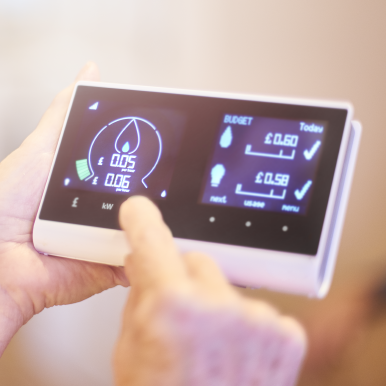
Can you save money with a smart meter for business?
Business smart meters help you track how much energy your business uses for accurate billing and to...
Can your business generate its own electricity to save money?
Each year more and more SMEs are investing in green infrastructure. And using self-generated electri...